
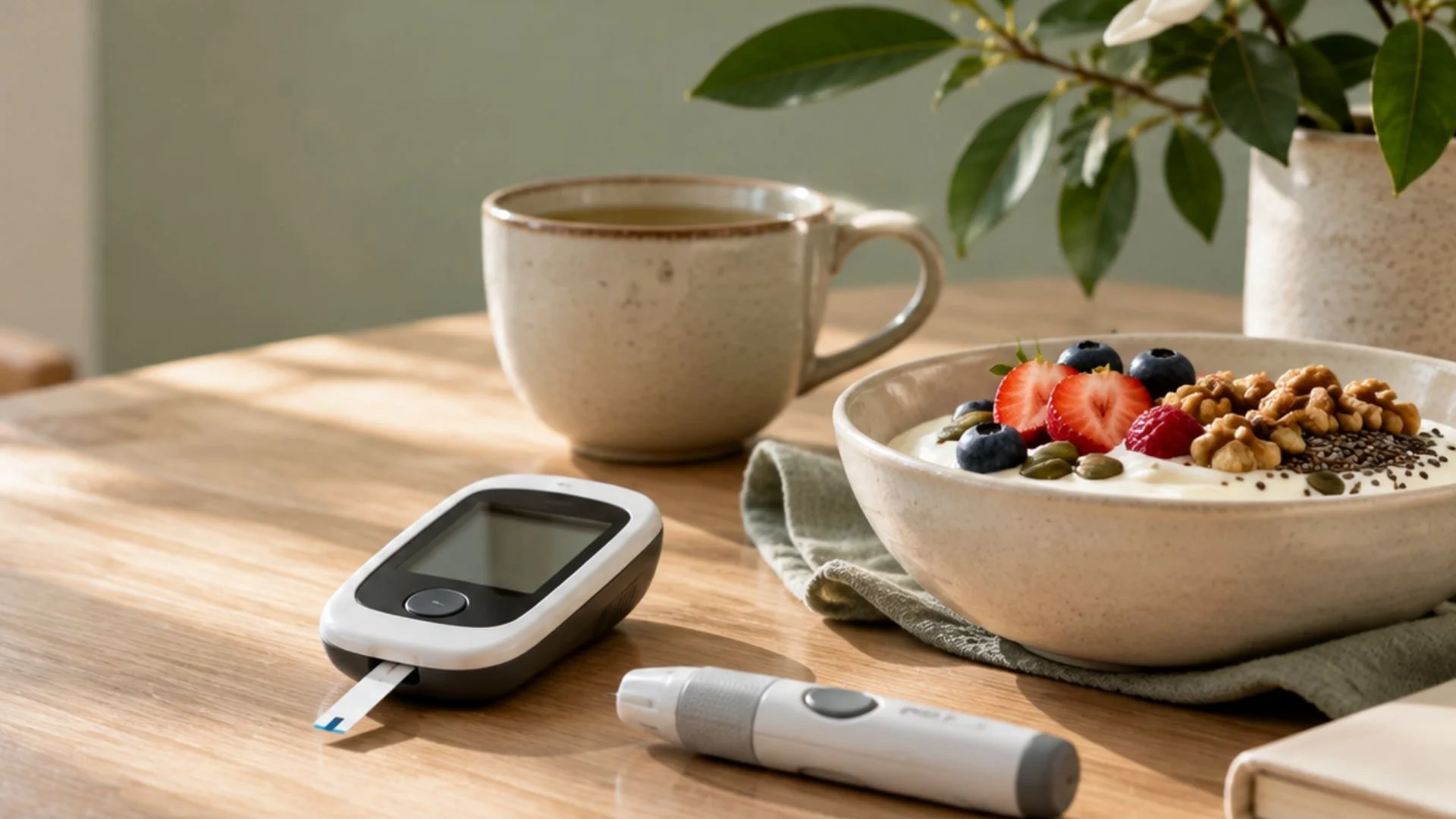
You're eating the way you always have. You haven't stopped moving. And yet your clothes fit differently around the middle, your energy dips after lunch, and at your last check-up your doctor mentioned your blood sugar was "a bit high."
There's a link between menopause and blood sugar that rarely gets explained. Understanding it gives you real power to protect your health in the decades ahead.
Why this matters in Indonesia
According to the International Diabetes Federation, about 20.4 million Indonesian adults were living with diabetes in 2024, the fifth-highest number in the world. That number is projected to reach 28.6 million by 2050.
Type 2 diabetes doesn't appear overnight. It builds slowly over years, often silently, and midlife is one of the most important windows to change its course, especially for women.
What estrogen does for insulin
Insulin is the hormone that moves sugar from your blood into your cells, where it's used for energy. Estrogen helps insulin do this job well.
As estrogen falls through the menopause transition, your cells can respond less well to insulin. Doctors call this insulin resistance. Your body then needs more insulin to keep blood sugar in range, and over time blood sugar can creep up. This is one reason the risk of type 2 diabetes rises after menopause.
Visceral fat, even when the scale doesn't move
During the menopause transition, fat tends to shift from the hips and thighs towards the belly, and deeper inside it, around the organs. This is called visceral fat, and it's more closely linked to insulin resistance, heart disease and diabetes than fat elsewhere.
The important part: this shift can happen even if your weight stays the same. That's why the scale alone doesn't tell the full story, and why your waist and your blood tests matter.
Your metabolism didn't "slow down" at 40
A large study in Science, which measured energy use in thousands of people, found that daily energy expenditure stays fairly stable between ages 20 and 60. So what changes in midlife? Largely body composition: less muscle, more visceral fat, and changing hormones.
Muscle is your body's biggest sugar store
After a meal, most of the sugar that insulin clears from your blood, roughly 80%, goes into your muscles. Muscle is where your body stores and burns that sugar.
From our 30s onwards, we gradually lose muscle unless we work to keep it, and the hormonal changes of menopause can speed this up. Less muscle means less space to store sugar. Building and keeping muscle is one of the most powerful things you can do for your blood sugar after 40.
The numbers to know: HbA1c and fasting glucose
Two blood tests give you a clear picture:
HbA1c shows your average blood sugar over about the past three months.
Fasting glucose shows your blood sugar after at least 8 hours without food.
The American Diabetes Association uses these ranges:
Normal: HbA1c below 5.7%; fasting glucose below 100 mg/dL
Prediabetes: HbA1c 5.7–6.4%; fasting glucose 100–125 mg/dL
Diabetes: HbA1c 6.5% or higher; fasting glucose 126 mg/dL or higher (confirmed by your doctor)
Prediabetes is a signal, not a sentence. It's the stage where changes in how you eat, move and sleep make the biggest difference. Ask for both tests at your next check-up, especially if diabetes runs in your family.
The plate, by hand
You don't need to count calories or give up the foods you love. Our nutritionist, Richita Mirchandani, RNutr, uses a simple method based on your own hands:
Half your plate vegetables: about 2 palms (sayur bening, gado-gado vegetables, tumis kangkung)
Protein: 1 palm, plus an extra thumb (tempe, tahu, ikan kembung, chicken, eggs)
Carbohydrates: 1 cupped fist (nasi merah, potatoes, corn)
Healthy fats: 1 thumb (avocado, nuts, a little coconut or olive oil)
Protein and vegetables first, carbohydrates last, helps soften the rise in blood sugar after a meal. Midlife nutrition isn't about restriction. It's about support.
A simple movement plan
Strength training 2 to 3 times a week. Build the muscle that stores sugar. Squats, hinges, pushes, pulls and carries cover the whole body.
A 10-minute walk after meals. Even a short, easy walk after eating helps your muscles use the sugar from that meal.
Aim for 150 minutes of moderate activity a week, such as brisk walking, cycling or swimming.
Protect your sleep. Poor sleep, common in perimenopause, makes insulin resistance worse.
Where HRT fits
HRT isn't prescribed to prevent diabetes. But in large clinical trials, women taking hormone therapy developed diabetes less often than women taking a placebo. If you're already considering HRT for symptoms like hot flashes, poor sleep or joint pain, your doctor can talk you through how it fits with your blood sugar and heart health.
The takeaway
Menopause changes how your body handles sugar, but it doesn't decide your future. Know your numbers, build your muscle, fill your plate well, and keep moving after meals.
Know your numbers, then make a plan. In a Magnolia Hormone & Health Consultation, your hormones, blood sugar and body composition are looked at together, with a Magnolia Navigator Coach™ and a Magnolia doctor. Book your consultation here.
Sources
International Diabetes Federation. IDF Diabetes Atlas, 11th edition (2025): Indonesia country data.
El Khoudary S.R. et al. (2020). Menopause transition and cardiovascular disease risk: implications for timing of early prevention. American Heart Association Scientific Statement, Circulation.
Pontzer H. et al. (2021). Daily energy expenditure through the human life course. Science.
DeFronzo R.A. & Tripathy D. (2009). Skeletal muscle insulin resistance is the primary defect in type 2 diabetes. Diabetes Care.
American Diabetes Association. Standards of Care in Diabetes: diagnosis and classification.
Buffey A.J. et al. (2022). The acute effects of interrupting prolonged sitting time in adults with standing and light-intensity walking on biomarkers of cardiometabolic health. Sports Medicine.
Manson J.E. et al. (2013). Menopausal hormone therapy and health outcomes during the intervention and extended poststopping phases of the Women's Health Initiative randomized trials. JAMA.
This article is for education only and is not a substitute for medical advice. Please talk to your doctor before making changes to your health routine.
