
Book a Consultation
Find Balance, Confidence & Vitality Through Personalized Perimenopause & Menopause Support.
Book your session today and take the first step toward thriving in this transformative stage of life.
What to Expect During Visit(s)
-
![A nurse or healthcare worker with red hair wearing scrubs and a headset, on a virtual consultation with a woman on a laptop, in a clinical or home setting.]()
Personalized one-on-one sessions with an experienced Peri/menopause Coach.
-
![A person holding a green circular paper with a black smiling face, with a green background.]()
Comprehensive well-being strategy addressing physical, emotional, and mental health.
-
![A woman in a green dress sitting on a beige chair, holding hands with a woman in a medical coat, sitting on a similar chair, in a consultation or therapy setting.]()
In-depth education on peri/post-menopause, hormonal fluctuations, symptoms, treatments, and adjunct therapies.
-
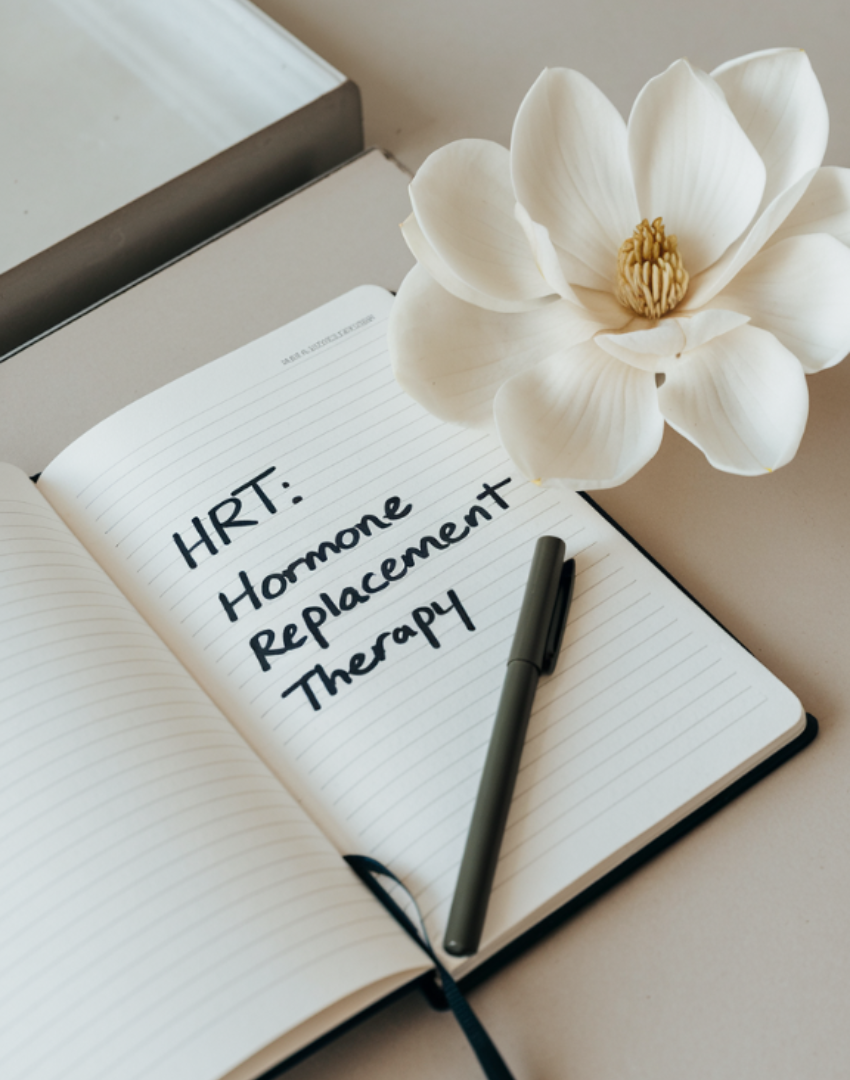
![Open notebook with handwritten text reading 'HRT: Hormone Replacement Therapy', a black pen resting on the page, and a white magnolia flower beside it on a light-colored surface.]()
Detailed exploration of hormone replacement therapies and non-hormonal alternatives.
-
![A woman with blonde hair sitting on a bed, smiling, holding a glass of water in one hand, and stretching with her other arm in a brightly lit room.]()
Guidance on lifestyle modifications across the 5 Pillars of Health for Optimal Well-Being.
-
![Woman with dark brown hair in a bun, wearing a teal blouse and earrings, working on a laptop at a table with a white flower in the foreground.]()
Continuous support to monitor symptom progression, address ongoing challenges, and provide the latest evidence-based information.





MAGNOLIA NAVIGATOR COACH
CARE PLANS
Care Plan 1
Starter Reset
2 sessions
A two-session intro for women just starting their journey. Includes a deep consultation and follow-up to prep for your practitioner visit and begin lifestyle changes.
✓ Consultation (75 mins)
Deep dive session
+ Hormone Replacement Therapy Education
+ Practitioner Preparation
+ Pillars of health overview
✓ Follow-up (60 mins)
Recap of Practitioner Visit
+ First Lifestyle Pillar Focus
$200
($1.48/min)
Care Plan 2
Foundations Package
4 sessions
Four sessions to explore key lifestyle Pillars and stay supported through transitions. Ideal for women ready to build momentum and accountability.
✓ Consultation (75 mins)
✓ Follow-ups:
#1 (60 mins)
Recap of Practitioner Visit
+ Lifestyle Pillar 1
#2 (45 mins)
Lifestyle Pillar 2
#3 (45 mins)
Lifestyle Pillar 3
$325
($1.44/min)
Care Plan 3
Empowered Journey
8 sessions
Eight sessions of long-term care, covering all 5 pillars with progress tracking and personalized planning. For women committed to full transformation.
✓ Consultation (75 mins)
✓ Follow-ups:
#1 (60 mins)
Recap of Practitioner Visit
+ Lifestyle Pillar 1
#2 - #6 (45 mins each)
Lifestyle Pillars 2–5
+ Ongoing Accountability
#7 (30 mins):
Annual Check-In or Future Planning
$525
($1.35/min)
Care Plan 4
Magnolia
Maintenance
post-initial annual bundle completed
Built for those who’ve completed a full package and want to stay supported. Includes flexible sessions throughout the year.
✓ Consultation (90 mins)
Three 30 min sessions
or one 60 min + one 30 min throughout the year
$135
($1.50/min)
⚠️ Your safety matters most. If you're experiencing a medical emergency or crisis, please contact your local emergency services immediately. While we're here to support your long-term wellness journey, we aren't able to provide emergency care.
MAGNOLIA NAVIGATOR COACHES™
We are trained Peri/Menopause Coaches dedicated to supporting women throughout their peri/post menopause journey.
We provide a tailored approach to meet the unique needs of each client by providing access to evidence-based information and resources.
Our hope for every woman is that through this process she will feel herself again and begin to thrive during this important stage of life and beyond.
-
![A smiling woman with curly blonde hair wearing a navy sleeveless top and a necklace with a small pendant, standing against a green background.]()
Theresa Lovelin, BSN, RN
• Registered Nurse with 20+ years of global clinical experience across the U.S., South Korea, and Hong Kong.
• Bachelor of Science in Nursing, Oregon Health & Science University.
• Founder of Magnolia Collective Wellness.
• Dedicated to transforming the peri/menopause journey through education, empathy, and expert care.
Language: English -
![Photo of a woman with shoulder-length blonde hair wearing a black dress with lace sleeves, smiling at the camera, against a green background. There are two overlapping badges on her chest, one pink reading 'Heather Hirsch Academy Women's Hormone Therapy Specialist' and one purple reading 'Heather Hirsch Academy Mastering the Musculoskeletal Syndrome of Menopause.']()
Miki’ala Stulen, MSN, RN, CNS-BC
• Registered Nurse with 20+ years of clinical and leadership experience in cardiology and women’s health.
• Master of Science in Nursing, University of Hawai‘i at Mānoa; Bachelor of Science in Nursing, California State University, Chico; Board-Certified Adult Health Clinical Nurse Specialist (CNS-BC).
• Former Regional Manager at The Queen’s Medical Center, overseeing multidisciplinary teams and multi-million dollar operations.
• Passionate about guiding women through peri/menopause with culturally informed, evidence-based care and deep compassion.
Language: English
-
![Portrait of a smiling woman with blonde hair, wearing a black top, pearl earrings, and a gold necklace with a small blue pendant. The background is green. There is a pink badge on her shoulder with the text 'Heather Hirsch Academy Women's Hormone Therapy Specialist'.]()
Brooke Steuer, ASN, RN
• Registered Nurse with 20+ years of nursing experience, including 13 years of diverse clinical practice across Florida and Virginia.
• Associate of Science in Nursing, Santa Fe College.
• Clinical background in Progressive Care, Intensive Care, Electrophysiology, Cardiac Cath Lab, Interventional Radiology, and Outpatient Vascular Surgery.
• Passionate about helping women understand peri/menopause so they can confidently advocate for their health and choices.
Language: English
-
![]()
Bdn. Azani Fitria, SKM, MARS
• Midwife, women’s health educator, and wellness advocate with over 16 years of experience supporting women through key life stages, with a focus on movement, pelvic floor care, postnatal recovery, and long-term strength.
• Recognized public speaker and certified fitness educator passionate about bridging clinical knowledge with everyday women’s experiences, helping women feel informed, supported, and confident in their health journey.
• Committed to supporting women navigating peri/menopause with compassionate, evidence-based care that empowers them to reconnect with their bodies and move through this transition with confidence.
Language: Bahasa Indonesia
-
![]()
Miranda Soegomo, RN, MSN
• Registered nurse with a Master of Science in Nursing and experience across home healthcare, pediatric surgical and transplant care, maternal and baby care, mental health, rehabilitation, and community health.
• Experienced in patient assessment, health education, medication support, treatment coordination, and helping patients and caregivers better understand medical recommendations.
• Brings a multidisciplinary healthcare perspective through her nursing career and earlier training as a clinical dentist in Indonesia.
• Committed to supporting women through peri/menopause with compassionate, evidence-informed guidance that helps them understand their symptoms, prepare for healthcare appointments, and feel more confident in their care journey.
Language: Bahasa Indonesia


MAGNOLIA DOCTORS
Magnolia brings together trusted, experienced physicians as part of our care team, so your perimenopause and menopause journey feels seamless, supported, and connected.
Our Magnolia Doctors provide the medical expertise you need from assessment and diagnosis to treatment options, including prescriptions when appropriate.
Alongside them, Magnolia Navigator Coaches™ guide and support you throughout your journey, helping you understand your symptoms, navigate your care, and feel confident in your next steps.
Together, this integrated approach combines clinical expertise, education, and compassionate support, so you receive care that is not only personalized, but truly complete.
-
![]()
Dr. Dinda Derdameisya, Sp.OG
Chief Medical Officer & Magnolia Doctor — Indonesia
• Obstetrician & Gynecologist with extensive experience in women’s reproductive health, pregnancy, and wellness.
• Medical Doctor (2007) and Specialist in Obstetrics & Gynecology (2014), University of Indonesia.
• Former clinician at Dharmais National Cancer Hospital (2015–2017); currently practicing at JWCC Asih and Brawijaya Women and Children Hospital Antasari.
• Passionate about empowering modern women through accessible, evidence-based information on reproductive health, pregnancy, and hormonal wellness.
Language : Bahasa Indonesia and English -
![]()
Dr. Shendy Ardaneswari
Magnolia Doctor — Indonesia
• Family Doctor delivering primary care services to local and expatriate populations, with a focused interest in women’s health.
• She currently practicing at Good Practice and actively conducts health education talks.
• Dedicated to evidence-based practice, patient education, and empowering women to take an active role in their health.
• Strong clinical focus on women’s health, preventive medicine, and holistic care with a commitment to supporting women through hormonal health, metabolic concerns, and life-stage transitions.
Language: Bahasa Indonesia & English


MAGNOLIA LIFESTYLE SPECIALISTS
At Magnolia Collective Wellness, we believe lasting wellbeing goes beyond prescriptions.
Our Lifestyle Specialists including Certified Fitness Coaches and Registered Nutritionists — work alongside your Magnolia Doctors and Magnolia Navigator Coaches™ to support the everyday habits that shape how you feel through every stage of perimenopause and menopause.
From movement and nutrition to sleep and stress, they provide personalised, evidence-informed guidance — helping you turn small, sustainable changes into meaningful, lasting results.
-
![]()
Esther Jusuf, CFT
Magnolia Strength & Fitness Coach
• Certified Fitness Trainer (APKI) with 3+ years of strength training and 1+ year coaching women 40+
• Focused on safe, structured, sustainable movement for perimenopause and menopause
• Currently completing Girl Gone Strong Menopause Coaching Specialist certification
• Designs personalized programs to reduce fatigue, joint pain, and loss of strength while boosting confidence
• Known for an empathetic, evidence-based approach that aligns with Magnolia’s mission
Language: Bahasa Indonesia & English
-
![]()
Richita Mirchandani, RNutr
Magnolia Women’s Nutrition Specialist
• Registered Nutritionist (RNutr) and Body Image Coach for women across life stages
• Helps women build a healthier, more compassionate relationship with food and their bodies
• Former Educator & Co-Founder at Simplified Fitness; past collaborator with Bobby Nutrition
• Supports women navigating emotional eating and body image with sustainable, habit-based strategies
• Holds a Bachelor’s in Nutrition from Curtin University, Perth (2019)
• Believes a supportive relationship with food is essential to long-term health and quality of life
Language: Bahasa Indonesia & English


Frequently Asked Questions
-
It depends on where you are in the world when using these terms. The UK uses body-identical to describe HRT that has been rigorously researched, is plant-based, mimics hormones within the body and has been approved by federal regulators.
Bio-identical can also mean the same as body-identical depending on where you are in the world. However, this term often refers to compounded HRT that is not regulated, has little oversight with minimal research. Because of this they are usually not covered by insurance and can be quite costly. That said, with the right doctor and a nuanced conversation these could benefit some women. It's important to discuss all of your options and your personal situation with your doctor.
-
Genitourinary Syndrome of Menopause (GSM) affects up to 80% of women. Symptoms include dryness, itching, burning, thinning of vaginal/vulvar skin, recurrent UTIs, low libido, prolapse, urgency, urine leakage.
The vaginal and bladder regions are rich in estrogen and testosterone receptors; when estrogen fluctuates and drops in perimenopause and then crashes in menopause, these tissues are affected.
The American Urological Association Guidelines state effective options are: low-dose vaginal estrogen, vaginal DHEA or ospemifene. These are LOCAL treatments meaning they do not enter the bloodstream, don't raise breast or endometrial cancer risk, and can be used alongside systemic HRT. Any knowledgeable doctor can prescribe them; it doesn't need to be an OBGYN.
-
It's important to discuss options with a knowledgeable doctor. You may be a candidate for transdermal (through-the-skin) HRT, which bypasses the liver and avoids first-pass metabolism. Oral HRT would likely need to be avoided.
Your doctor will want to know: how long you've had the condition, the cause, how often you check liver enzymes, recent labs, and whether it's acute or chronic.
HRT can help with night sweats and the weight shift, estrogen is involved in metabolic health, and its loss contributes to inflammatory visceral fat. But HRT isn't a cure-all. Lifestyle factors matter: sleep, nutrition, exercise, stress, mental health, community.
-
Primrose oil might help with some symptom relief, particularly with decreasing severity and frequency of hot flashes and night sweats. But it doesn't work for every woman, and it's not the same as replacing estrogen.
It also hasn't been studied to the depth that HRT has. Every woman deserves a conversation with her doctor to fully understand her personal situation.
-
GLP-1 medications have proven benefits for women in perimenopause and postmenopause. GLP-1 receptor agonists mimic hormones that regulate blood sugar, slow digestion, and increase satiety.
They help regulate the metabolic shifts of midlife, improving insulin sensitivity, reducing visceral fat, and lowering cardiovascular risks (blood pressure, LDL cholesterol).
Recommended reading: 'Weightless' by Dr. Rocío Salas-Whalen, MD.
-
There's no single blood test that determines whether someone will develop Alzheimer's. Several markers can point to higher risk:
→ APOE genotyping (limited availability in Indonesia)
→ Homocysteine
→ Vitamin B12 + folate
→ HbA1c / fasting glucose
→ Lipid panel
→ hs-CRP
→ Vitamin D
These reflect chronic inflammation. Since you've had one ovary removed, it's also important to be evaluated and consider hormone replacement therapy as part of the conversation.
-
No, HRT does not increase breast cancer risk from baseline. The common association stems from the misinterpreted 2002 Women's Health Initiative (WHI) results, which the media publicized as misinformation.
Women in the WHI study taking estrogen alone had statistically significant reductions in breast cancer. Women on estrogen + progestin (synthetic formulation) had a small, statistically insignificant risk.
Long-term WHI data shows women on HRT aged 50–59 (or within 10 years of menopause) experience decreased all-cause mortality. HRT is not associated with cancer mortality. Modern body-identical formulations don't raise breast cancer risk above baseline.
-
Menopause is defined as one day in our lives after the absence of natural periods for 12 consecutive months. Average age is 51 (49 for Asian women).
Perimenopause is the transitional period leading up to menopause. Think of it as the reverse of puberty, ovaries gradually coming 'off-line.' Like puberty, it's marked by irregular periods, changes in bleeding patterns, and hormonal fluctuations.
Perimenopause can begin 7–10 years before menopause. It's not uncommon to start in your late 30s or early 40s. A common early sign: “I just don't feel like myself.” You should not be told “you're too young.”
Want to better understand the signs and symptoms of perimenopause? Read Magnolia’s guide to 34 key symptoms of perimenopause:
https://www.magnoliacollectivewellness.com/blog/34-key-symptoms-of-perimenopause
-
A common sign of early perimenopause is: “I just don't feel like myself.”
Many women experience mood symptoms first, driven by hormonal fluctuations in both the brain and body. Not all women get the stereotypical hot flashes or night sweats.
Educate yourself on the full range of possible symptoms, see our complete guide on the Magnolia Blog:
-
Managing perimenopause and menopause symptoms often involves a combination of lifestyle changes, supplements, and medical treatments.
Hormone Replacement Therapy (HRT) topical or oral estrogen with progesterone is one of the most effective options. It can relieve hot flushes, mood changes, and vaginal dryness, while supporting bone health.
For those who prefer not to use systemic hormones, non-hormonal medications and local treatments (lubricants, vaginal estrogen) can also help.
-
HRT is typically manufactured, but many preparations are body-identical meaning they have the same chemical structure as the hormones your body produces (estrogen, progesterone).
They're mostly derived from plant sources like soy or yams, then processed in labs to match human hormones. Some synthetic forms like conjugated equine estrogens come from animal sources.
Though not taken directly from the human body, HRT is designed to act similarly to your natural hormones. Types vary: some are body-identical, others are synthetic (slightly different structure).
-
A family history of cancer is not an absolute contraindication to HRT. The main hormones involved are estrogen and progesterone, with different types and ways to take them.
Even with a strong family history of breast cancer (or past breast cancer), some HRT forms may still be considered depending on your individual situation. Current evidence doesn't show significant additional breast cancer risk from HRT in women with family history compared to those without.
Regular monitoring including mammograms is essential. HRT should always be individualized and reviewed regularly with your healthcare provider.
-
This is common and frustrating. During perimenopause, fluctuating hormones affect metabolism, fat storage, appetite, stress response, and sleep. What used to work may no longer work.
The approach needs to be different now. Instead of going stricter, look at:
→ Prioritizing protein and fiber intake
→ Regularity of meals: are you eating enough?
→ Sustainability: is your plan manageable long-term?
What can be modified?
Midlife nutrition isn’t about restriction, it’s about supporting your body differently.
Begin your nutrition journey with Magnolia’s Fuel Better, Live Longer program:
-
Tennis is cardio, great for cardiovascular health and bone density, but doesn't build muscle.
1. STRENGTH TRAIN 2–3x/week. Lean muscle is metabolically active and burns calories. We lose muscle after 30, use it or lose it.
2. REST. Active lifestyles need recovery days for muscles and the nervous system.
3. NUTRITION: ~30g protein/meal, 30–45g fiber/day, regular meals, nutrient-rich breakfast.
4. Track hip-to-waist ratio, the scale fluctuates daily.
With estrogen loss, fat shifts to the midsection ('meno-belly'), visceral and inflammatory. It can be stubborn. Lift weights, eat high-protein, rest, and consider Menopause Hormone Therapy (MHT) with a knowledgeable doctor.
Ready to build strength and support your body through midlife? Explore Magnolia’s Live Stronger, Longer Strength & Fitness Program:
https://www.magnoliacollectivewellness.com/live-stronger-longer
-
Yes, HRT can be used during perimenopause to manage symptoms and support overall health. It also helps protect bones and reduces the risk of osteoporosis and cardiovascular disease, since estrogen declines across perimenopause, menopause, and postmenopause.
HRT can be taken long-term, as long as the benefits outweigh the risks for you.
All women on HRT should have a yearly review with their healthcare provider to ensure it remains appropriate and safe.

CLIENT TESTIMONIALS
-
![Line drawing of a open lotus flower with five petals]()
Jessica Long
The consultation process was effortless - I felt seen and understood and that there was someone who truly cared about my wellbeing during a time that has been difficult to navigate.
-
![Line drawing of a blooming flower with large petals.]()
Erin D
It was very helpful. I think the only thing missing is being able to be prescribed the hormones.
-
![A woman with brown hair, wearing glasses and a patterned blouse, smiling at the camera against a plain light background.]()
Cheryl Hordenchuk
Meeting with Theresa was extremely helpful. I had done some reading and learning on my own. She was very kind in listening to me and then was thorough in her approach to walking through the various aspects of perimenopausal support. I then felt that it wasn’t “just me”. It was normalized. Then I was also well prepared to go to a local clinic to get what I needed in terms of HRT. She even followed up a few times to check in on me. I am so excited about it that I keep sharing details with friends and colleagues.
-
![Line drawing of a stylized flower with five petals.]()
Rosetta
I had a great experience with Theresa. She enlighten me about my experiences to where I was able to share with others.
-
![White outline of a blooming flower with five petals.]()
Beth
The Magnolia Collective has been incredibly helpful as I have started unpacking my perimenopause journey. An initial consultation with Theresa who has provided ongoing support and research is a comfort as I am in a region where not a lot is known and less is talked about. Understanding more about menopause and following information the Magnolia Collective has put out has made it easier to talk with other women about the changes we experience.
-
![White line drawing of a stylized flower with five petals.]()
Nitasha Crishna
I always find Theresa really down to earth and super helpful. She demystifies all the hype and supports women’s understanding around a topic that has long been shrouded in secrecy and misinformation. Take control and learn to thrive is my biggest takeaway - thank you.
-
![White outline of a blooming flower with detailed petals]()
Megan
I am so grateful to have attended one of Theresa's menopause education presentations as well as had the benefit of her 1:1 health coaching. Theresa is a knowledgeable, passionate advocate for women's health and in our coaching session, was able to share important information to give me the confidence that I needed to advocate for myself at my next doctor's visit. Thanks to her guidance, I approached my ob-gyn appointment with newfound clarity, leading to a hormone therapy plan that has significantly improved my quality of life. I highly recommend Theresa to all women looking for the latest research and information on perimenopause/menopause - her coaching has been a turning point for me. Theresa isn't just an educator; she's a catalyst for positive change. For any woman seeking to understand and confidently manage perimenopause or menopause, Theresa's coaching is an absolute game-changer.
-
![A man with a shaved head, black glasses, and a goatee smiling at the camera, sitting indoors with shelves and plants in the background.]()
Roderick des Tombe
As a husband to a woman going through perimenopause, this talk was deeply meaningful. It is mind boggling that so little is widely known about perimenopause - not only by the general public but also by the medical community. This talk gave me and my wife a clear explanation of what has been happening to her, and equipped us with the tools and solutions to alleviate the symptoms.