
A period starts arriving earlier than usual. Sleep becomes lighter. A shoulder or knee seems to ache for no obvious reason. Concentrating takes a little more effort. Mood changes feel harder to explain.
Taken separately, these changes can seem like stress, ageing, exhaustion, or simply a busy phase of life.
For some women, however, they may be signs of perimenopause — the transition leading up to menopause.
Research by Vonny Khresna Dewi estimates that around 7.4% to 11.54% of Indonesian women are in the perimenopausal stage, most commonly between the ages of 40 and 49. Research by Hikmah and colleagues also found that 93.9% of Indonesian women experience physical and psychological symptoms during the transition to menopause.
Despite how common it is, recognising perimenopause is not always straightforward.
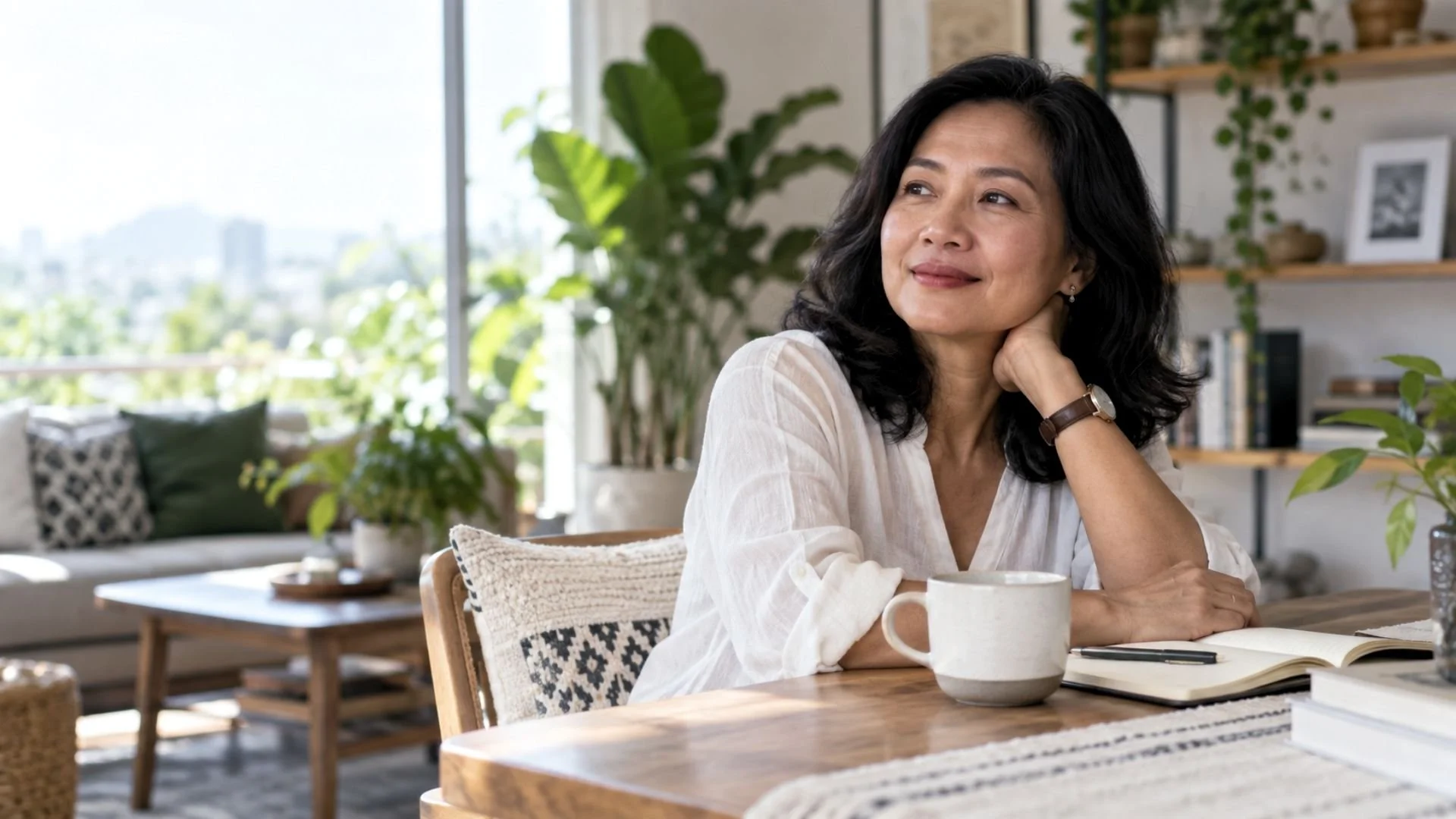
What can perimenopause actually feel like?
Menopause is often explained simply as the end of menstruation. But the transition happens before that point, and its effects can reach much further than the menstrual cycle.
Some of the changes women may experience include:
irregular or changing menstrual cycles
difficulty sleeping
mood changes or increased emotional sensitivity
brain fog or difficulty concentrating
headaches, muscle aches or joint pain
hot flashes and night sweats
vaginal changes or discomfort
changes in libido
Not every woman will experience the same symptoms, and not every change in midlife is necessarily caused by perimenopause. That uncertainty is exactly what can make the transition confusing.
A woman may seek help for poor sleep without mentioning changes in her period. Another may think joint pain is simply part of getting older. Someone experiencing changes in intimacy may not connect them with the hormonal changes happening elsewhere in her body.
Indonesia's Ministry of Health similarly describes menopause-related changes across menstrual patterns, sleep, mood, sexual health and physical symptoms, showing how widely the experience can vary from woman to woman.
The question is therefore not simply, “Am I in menopause?”
Often, the more useful starting point is: “What has changed in my body, and is it worth asking about?”
Why are so many women only learning about this in midlife?
Most women grow up knowing that puberty will happen. Periods are discussed. Pregnancy is discussed. Fertility is discussed. What happens decades later is often given far less attention.
A systematic literature review by Paramitha and Nuzuliana found that limited knowledge and cultural perceptions continue to influence the way Asian women experience menopause. Ideas around ageing, attractiveness and sexuality can make an already unfamiliar transition even more difficult to discuss openly.
And the knowledge gap is not limited to conversations at home.
A 2024 perspective in Nature Aging highlighted the historical lack of menopause consideration in ageing research. A separate 2023 survey cited by Yale School of Medicine found that although more than 90% of obstetrics and gynaecology residency programme directors surveyed in the United States believed standardised menopause education should be available, fewer than one-third of programmes provided it.
Women are now beginning to ask more questions themselves. They are talking about hormones, strength, nutrition, relationships, mental wellbeing, sexual health and what ageing well actually means. The conversation around menopause is becoming bigger because women are recognizing that midlife health is bigger than menstruation.
When midlife pain gets dismissed as “just getting older”
One area receiving particular attention this year is pain. 'Women are up to 70% more likely than men to experience chronic pain." (IMS, 2026 White Paper)
The 2026 World Menopause Day theme, "Chronic Pain at Midlife," focuses on an experience many women may recognize but not necessarily associate with menopause. Common kinds of pain are widespread pain and fatigue, pelvic pain, migraine, joint and muscle pain.
Orthopedic surgeon, Dr Vonda Wright, MD coined the term "Musculoskeletal Syndrome of Menopause" (MSM) recently. This can be described as "musculoskeletal pain, arthralgia, loss of lean muscle mass, loss of bone density with increased risk of resultant fracture, increased tendon and ligament injury," frozen shoulder, plantar fasciitis, and more. (Wright, 2024)
The challenge during midlife is identifying the source of pain. A sore knee may be blamed on exercise. Headaches may be blamed on poor sleep. Fatigue may be blamed on a busy schedule. Pelvic pain may be chalked up as 'just getting older.'
Sometimes those explanations may be right. But women should also have enough information to recognise when a pattern deserves a closer conversation with a healthcare professional.
Understanding what may be happening does not mean self-diagnosing every symptom as menopause. It means having the language to describe what has changed and knowing that those changes are worth discussing.
What if learning about midlife did not have to happen in a clinic?
Health information is important, but the environment in which women encounter that information matters too. A conversation about vaginal health can feel very different from reading a medical page alone at home.
Hearing another woman describe brain fog, sleepless nights or changes in intimacy can create a different kind of recognition: “So it isn’t only me.”
That idea is at the heart of Rise & Bloom 2026, taking place on 18 October 2026 at HallfPatiunus, Jakarta Selatan, in conjunction with World Menopause Day. Rather than organising the day as one long health seminar, Rise & Bloom brings different parts of midlife together through discussions, movement and shared experiences.
The programe includes conversations with doctors and women's health practitioners alongside strength training, sound healing, community sessions and Runway After 40.
It means participants can spend part of the day learning about their health, another part moving their bodies, and another simply talking to women who may be asking similar questions.
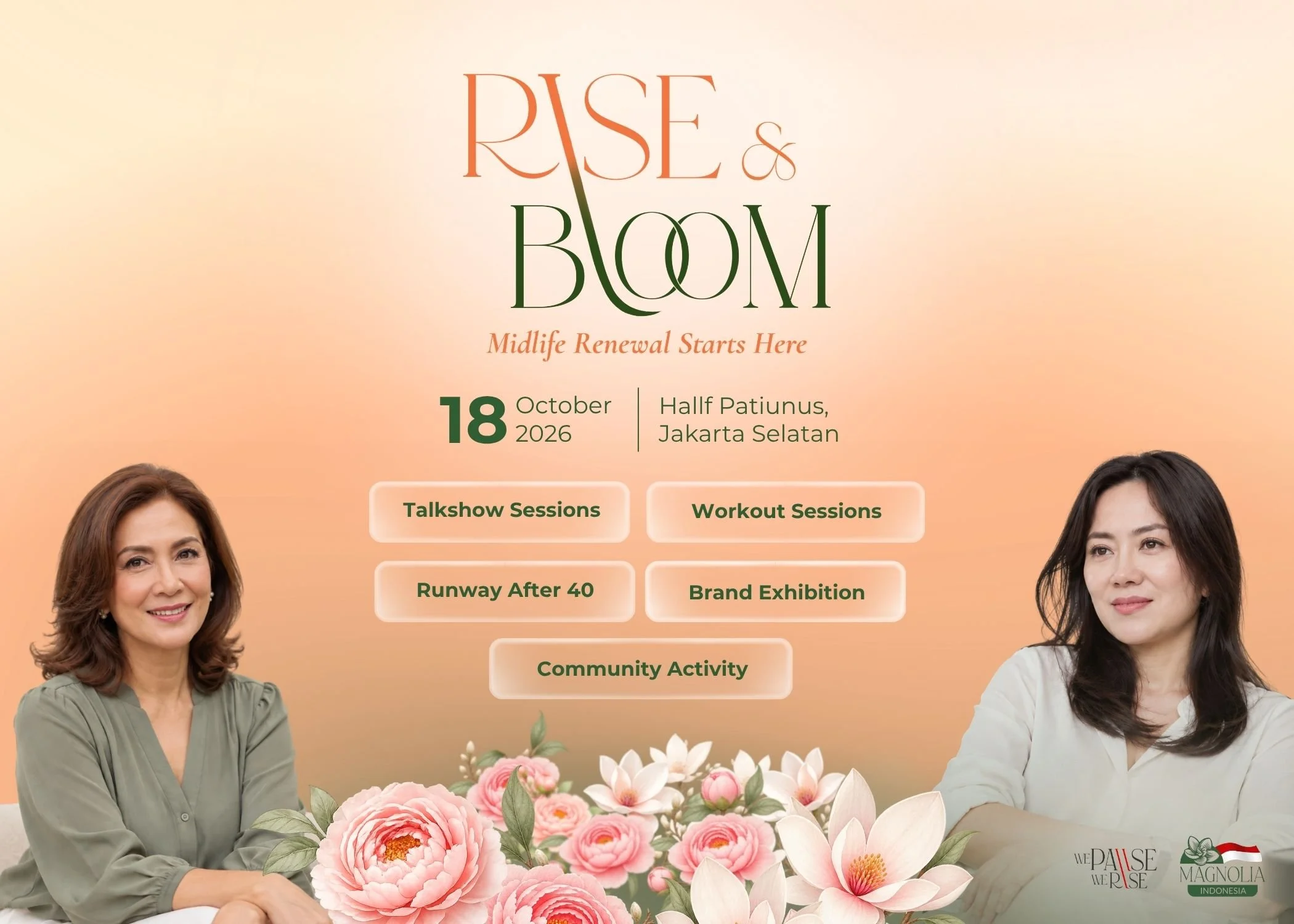
Creating a place where these conversations feel normal
The setting is part of that experience.
At HallfPatiunus, Rise & Bloom can move between educational sessions, movement activities and more informal moments throughout the day.
For a subject that is still often discussed privately, having those different spaces matters.
Someone may arrive wanting to understand hormones. Another may be thinking about nutrition or strength. Someone else may be struggling with sleep, relationships or intimacy but has never spoken about it openly.
They do not need to have the same experience of menopause to sit in the same room and that is the point.
From medical information to something women can actually use
Rise & Bloom is a collaboration between We Pause We Rise and Magnolia Collective Wellness Indonesia.
The event brings together doctors, health professionals, peri/menopause experts and community voices, including dr. Dinda Derdameisya, Sp.OG, dr. Shendy Ardaneswari, nutritionist Richita Mirchandani, RNutr, and psychologist and Lovepink Indonesia co-founder Madelina Mutia.
Around 400 participants are expected, with the programme designed to make clinically credible information easier to understand and connect with everyday life.
That approach reflects how We Pause We Rise began.
The community was founded by Mia Lukmanto and Cecelia Siby after recognising how little perimenopause and menopause were being discussed in Indonesia. Mia had experienced menopause earlier than many of her friends and gradually found herself becoming the person others approached with their questions. After meeting Cecelia during her own perimenopause journey, the two decided to create a community around those conversations.
Rise & Bloom takes that conversation offline and puts women, experts and shared experiences together in the same place.
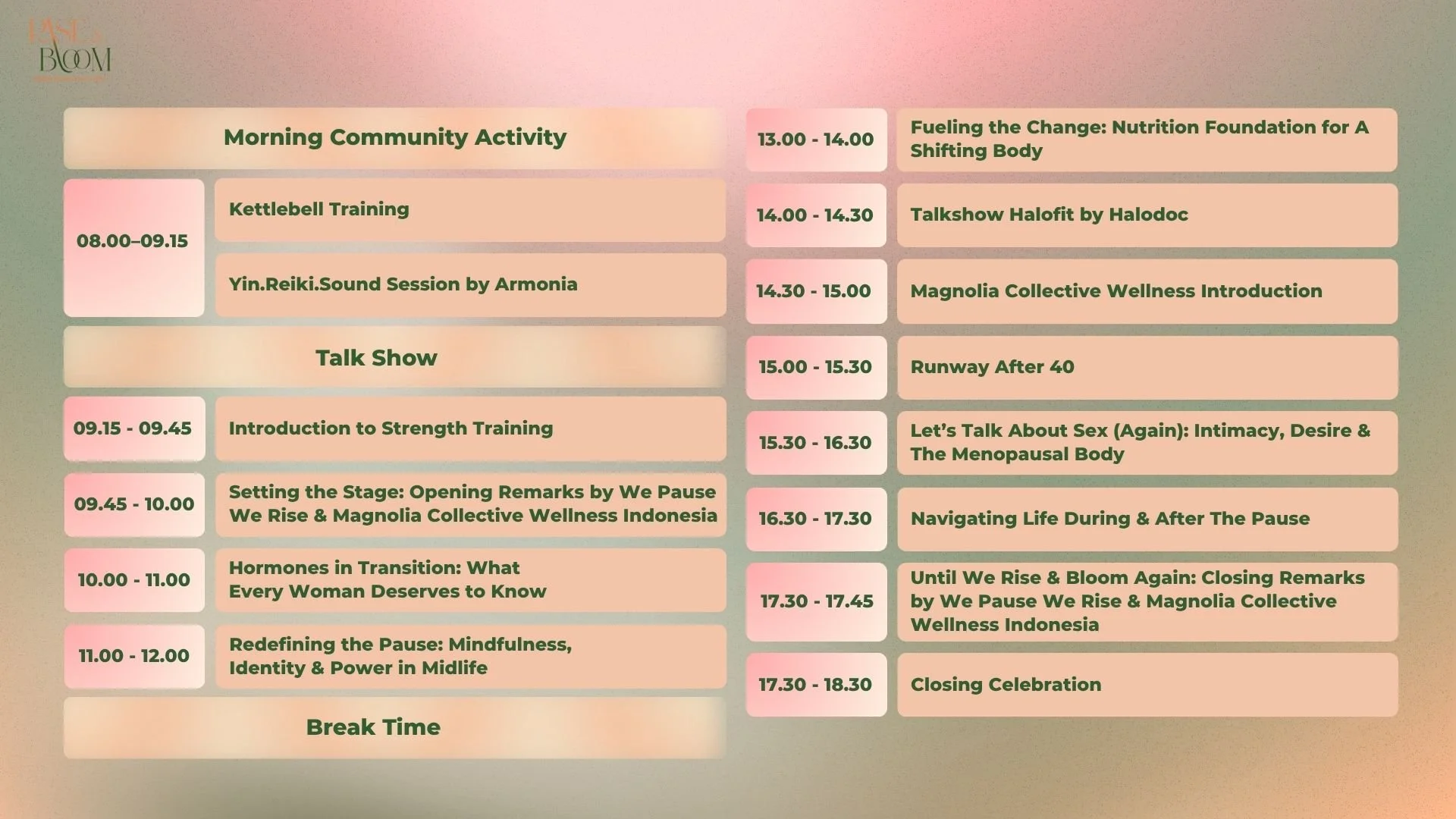
Rise & Bloom event rundown.
Maybe the first step is simply knowing what to ask
Women do not need to become menopause experts before entering midlife but they should not have to reach it completely unprepared either. Knowing that changes in sleep, periods, mood, joints, concentration or intimacy may deserve attention already creates a better starting point.
From there can come better questions. Questions for a doctor. Questions for a partner. Questions for another woman who has been through it.
And sometimes, questions we should have been encouraged to ask much earlier.
On 18 October at HallfPatiunus, Rise & Bloom will bring many of those conversations into one room for World Menopause Day.
Not because every woman experiences midlife in the same way, but because understanding it should not have to happen alone.
Rise & Bloom 2026 — Midlife Renewal Starts Here
18 October 2026
HallfPatiunus, Jakarta Selatan
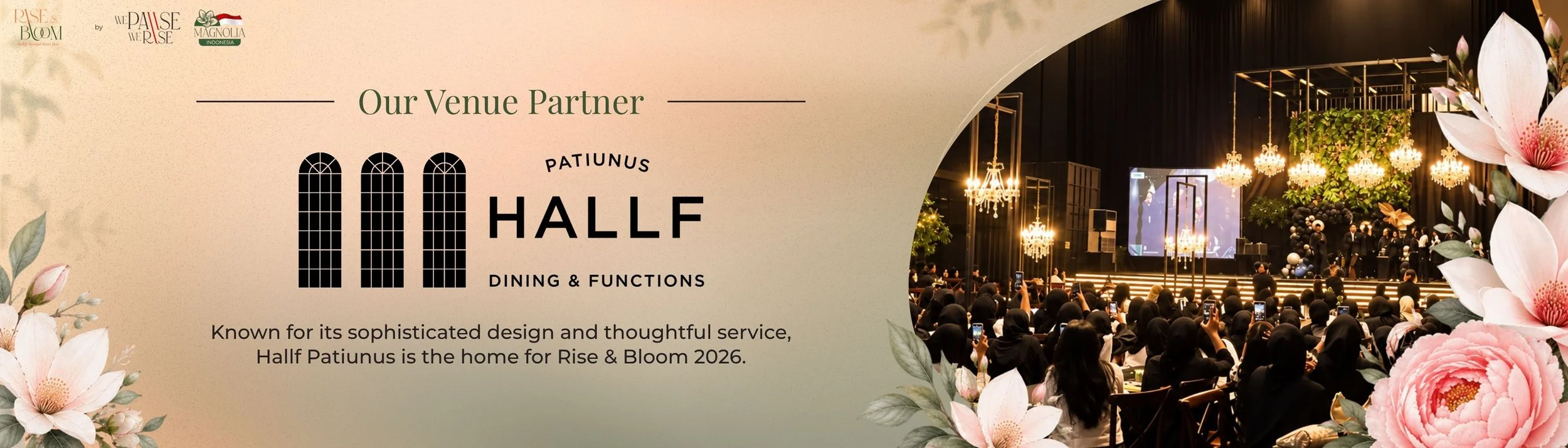
HallfPatiunus, our venue partner
For women who are beginning to notice changes, already navigating perimenopause, or simply want to understand what may come next, Rise & Bloom is a place to start the conversation with more clarity, better information, and other women who understand the journey.
See you there! Secure your slot here https://www.loket.com/event/rise-bloom-2026
