

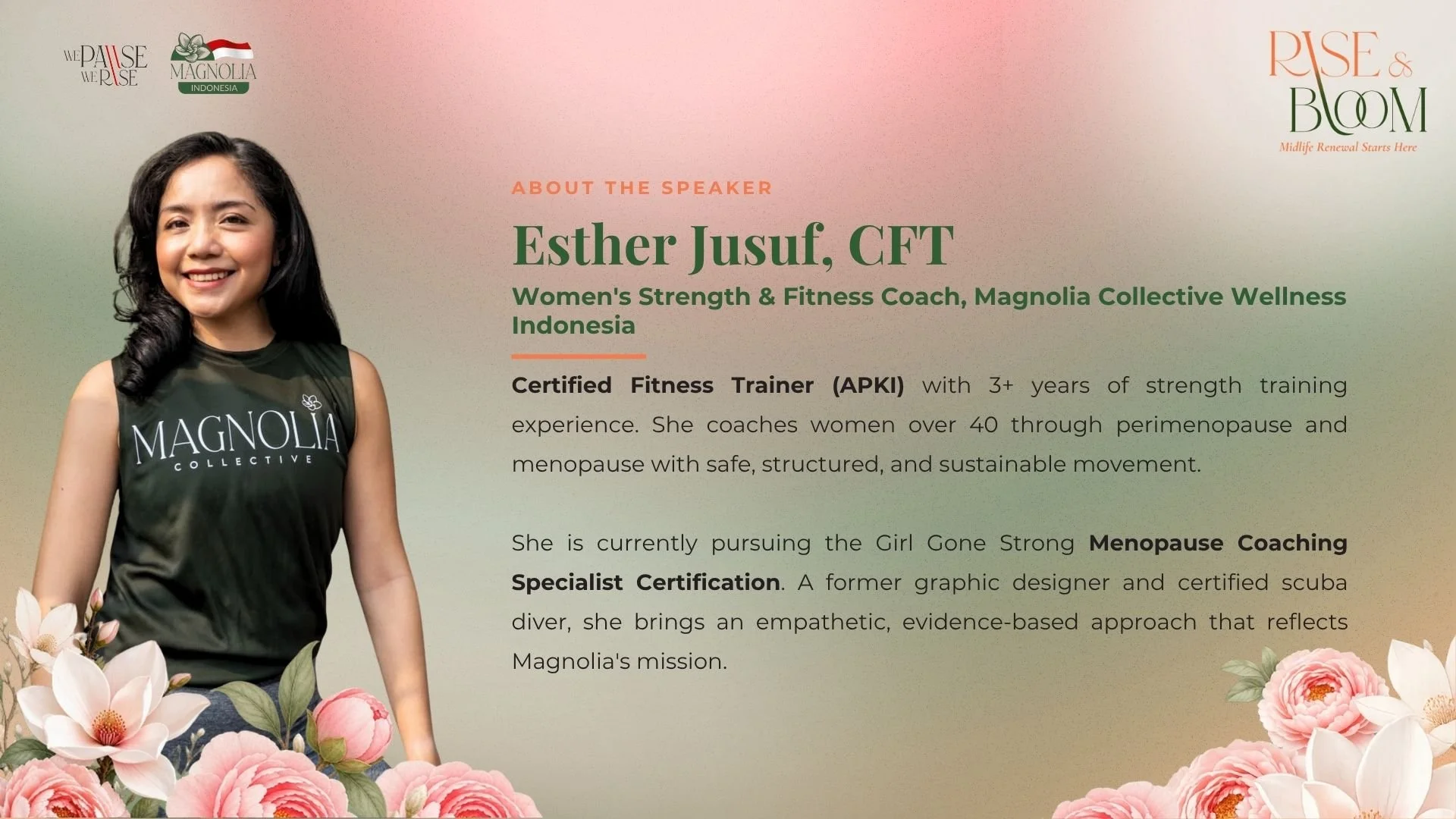
During this session, Esther Jusuf explored why strength training becomes increasingly important for women navigating perimenopause, menopause, and midlife. The conversation covered how hormonal changes affect muscle mass, metabolism, and physical strength, along with practical guidance on lifting weights, understanding exercise intensity, and building a sustainable training routine. Participants learned how strength training can support long-term health, independence, and confidence.
Key Takeways
01. Midlife Is an Important Time to Prioritise Strength
As women age, maintaining muscle mass and physical function becomes increasingly important. Midlife offers an opportunity to build strength and help reduce age-related physical decline.
Rather than exercising solely to change physical appearance, the focus should shift towards training for longevity, mobility, and independence.
Strength training helps women maintain the physical capabilities needed to stay active and confident as they grow older.
02. Hormonal Changes Can Make It Harder to Maintain Muscle
During perimenopause and menopause, declining estrogen levels can influence body composition and muscle health.
Muscle protein breakdown may begin to exceed muscle building, making it more challenging to maintain strength and muscle mass.
Muscle is also metabolically active, meaning it contributes to how the body uses energy. Preserving muscle helps support metabolism and physical function throughout midlife.
03. Strength Training Supports More Than Muscle Growth
Strength training develops skeletal muscle, which works alongside bones to support movement and everyday physical activities.
Its benefits extend beyond building strength. Regular resistance training can support:
Bone health: Helping maintain bone strength as women age.
Metabolic health: Supporting glucose regulation and body composition.
Mobility: Making everyday movements easier and more comfortable.
Physical function: Helping maintain independence and reduce age-related decline.
Overall wellbeing: Supporting cardiovascular health and physical confidence.
Building muscle is an investment in long-term health, not simply a fitness goal.
04. Challenging Your Muscles Is Important for Building Strength
Lifting weights that feel too easy may not provide enough stimulus for muscle growth.
The session introduced the importance of challenging muscles through resistance training, particularly as fast-twitch muscle fibres, which contribute to strength and power, are vulnerable to age-related decline.
Effective strength training involves choosing a resistance level that challenges your muscles while allowing you to maintain proper technique.
The goal is not necessarily to lift the heaviest weight possible, but to gradually build strength through safe and progressive training.
05. Use the RPE Scale to Understand Exercise Intensity
Esther introduced RPE (Rate of Perceived Exertion), a scale that helps measure how challenging an exercise feels.
For muscle-building exercises, the session recommended working around RPE 7 to 8, which means:
The exercise feels challenging.
You can maintain proper form throughout the movement.
You feel capable of completing only another 2 to 3 repetitions before reaching your limit.
This approach helps participants understand how to select an appropriate training intensity without relying solely on the amount of weight lifted.
06. Muscle Growth Requires More Than Exercise Alone
Building muscle effectively involves four important components:
Strength Training: Follow a structured resistance training routine and gradually increase the challenge through progressive overload.
Nutrition: Consume sufficient protein and balanced, nutrient-dense meals to support muscle repair and growth.
Sleep: Aim for approximately 7 to 9 hours of sleep to support recovery.
Consistency: Focus on proper technique and maintain regular training habits over time.
These elements work together to support sustainable improvements in strength and physical health.
07. You Can Start Strength Training at Any Experience Level
You do not need previous gym experience to begin building strength.
Beginners can start with a structured programme at home or in a gym, join a strength-focused group class, or work with a qualified personal trainer.
Learning proper movement techniques and selecting exercises appropriate to your current abilities are important first steps.
As strength and confidence improve, training intensity can gradually increase.
08. Strength Training Is About Capability, Not Becoming Too Muscular
Some women may hesitate to begin strength training because they worry about developing an overly muscular appearance.
The session raised this common concern to encourage participants to reconsider how they think about muscle and physical strength.
Rather than focusing on becoming smaller or avoiding muscle growth, strength training can be approached as a way to improve physical capability, maintain independence, and feel more confident in everyday life.
Building strength is about supporting what your body can do, both now and in the years ahead.
What You Can Do Next
If you are new to strength training, begin by exploring a beginner-friendly resistance training programme or seeking guidance from a qualified fitness professional.
Focus on learning basic movements, practising proper form, and gradually increasing resistance as your confidence improves.
Support your training with adequate protein, balanced meals, sufficient sleep, and consistent exercise habits.
Remember that strength training is not about comparing yourself to others or reaching a particular appearance. It is about building a body that can continue supporting the activities and experiences you value.
Build muscle. Build strength. Build confidence for what's next.
These takeaways are based on Esther Jusuf's presentation at Rise & Bloom 2026 and are intended for educational purposes. Exercise intensity and training programmes should be adapted to individual fitness levels, health conditions, and physical capabilities.
