
Rise & Glow: Caring for Your Skin with Confidence in Midlife

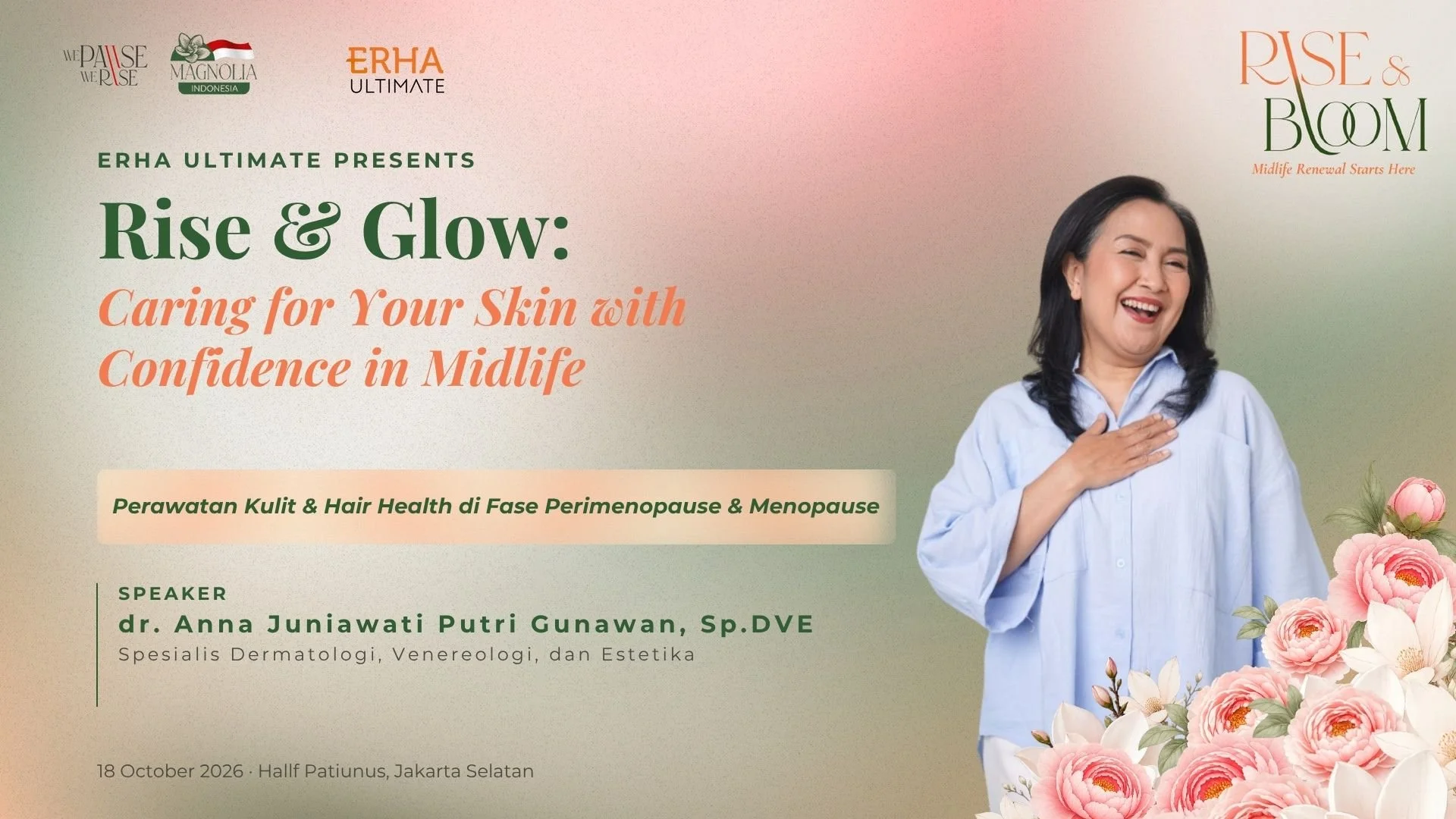
During this session, dr. Anna Juniawati Putri Gunawan explored how hormonal changes during perimenopause and menopause can affect women's skin and hair health. The conversation covered changes in collagen, skin sensitivity, adult acne, and hair loss, along with practical skincare recommendations, professional treatment options, and lifestyle habits that support healthy skin throughout midlife.
Key Takeways
01. Hormonal Changes Can Affect Your Skin and Hair
As estrogen levels decline during perimenopause and menopause, women may experience noticeable changes in their skin and hair.
Reduced collagen can lead to decreased skin elasticity and moisture, while changes in the skin barrier may cause dryness, itching, and increased sensitivity.
Hormonal fluctuations can also contribute to adult acne and hair loss. Understanding these changes can help women recognise when their skincare needs may be evolving.
02. A Healthy Skin Barrier Is the Foundation of Midlife Skincare
As skin becomes more prone to dryness and sensitivity, maintaining a healthy skin barrier becomes increasingly important.
The session highlighted three essential components of a basic skincare routine:
Gentle cleanser: Cleanses the skin without unnecessarily stripping away moisture.
Moisturizer: Helps maintain hydration and supports the skin barrier.
Sunscreen: Provides protection against UV exposure and helps prevent additional skin damage.
A consistent routine using suitable products can provide an important foundation for skin health.
03. Choose Skincare Based on Your Skin's Needs
Midlife skincare does not require an extensive collection of products.
Beyond basic skincare, targeted ingredients such as peptides may help improve the appearance of skin firmness and visible signs of ageing.
However, product selection should consider individual skin conditions, formulations, and specific concerns.
Using more products does not necessarily lead to better results. A personalised routine that addresses your skin's needs is often more appropriate than following every skincare trend.
04. Know When Your Skin Needs Professional Attention
Some skin changes can be managed through everyday skincare, while others may require assessment by a dermatologist.
Consider seeking professional advice when:
Symptoms persist: Skin concerns do not improve over an extended period.
Problems repeatedly return: Irritation, itching, or acne continues to recur.
Your daily comfort is affected: Skin concerns significantly affect your comfort or confidence.
Persistent symptoms deserve attention rather than repeated attempts to manage them through new products alone.
05. At-Home Care and Professional Treatments Have Different Roles
Daily skincare remains the foundation for maintaining hydration, protecting against UV exposure, and supporting basic skin health.
Professional dermatological treatments may provide more targeted care for concerns such as pigmentation, uneven skin texture, acne scars, and hair follicle health.
The appropriate approach depends on the nature of the concern, individual skin condition, and professional assessment.
Clinical treatments can complement a consistent skincare routine, but they do not replace everyday skin protection and care.
06. Healthy Skin Also Requires Support From Within
Skin and hair health are influenced by more than topical skincare products.
The session highlighted four lifestyle habits that contribute to overall wellbeing:
Adequate sleep: Supports the body's natural recovery processes.
Balanced nutrition: Provides nutrients needed to maintain healthy skin and hair.
Physical activity: Supports overall physical health.
Stress management: Helps support wellbeing and manage the effects of everyday stress.
Combining appropriate skincare with consistent lifestyle habits provides a more comprehensive approach to caring for yourself during midlife.
What You Can Do Next
Begin by reviewing your current skincare routine and paying attention to any changes in your skin or hair.
Focus on the essentials: gentle cleansing, adequate moisturising, and daily sun protection. Rather than adding multiple new products, consider whether your existing routine still suits your skin's current needs.
If you experience persistent dryness, recurring irritation, adult acne, or concerning hair changes, consider consulting a dermatologist for personalised advice.
Support your skin health through adequate sleep, balanced nutrition, regular movement, and stress management.
Your skin's needs may change as you move through midlife, and your approach to caring for it can change too.
Caring for your skin is not about stopping ageing. It is about understanding your changing needs and feeling confident in how you care for yourself.
These takeaways are based on dr. Anna Juniawati Putri Gunawan's presentation, supported by ERHA Ultimate, at Rise & Bloom 2026. This content is intended for educational purposes and does not replace personalised dermatological advice.
