
Fueling the Change: Nourishing a Midlife Body, With Kindness

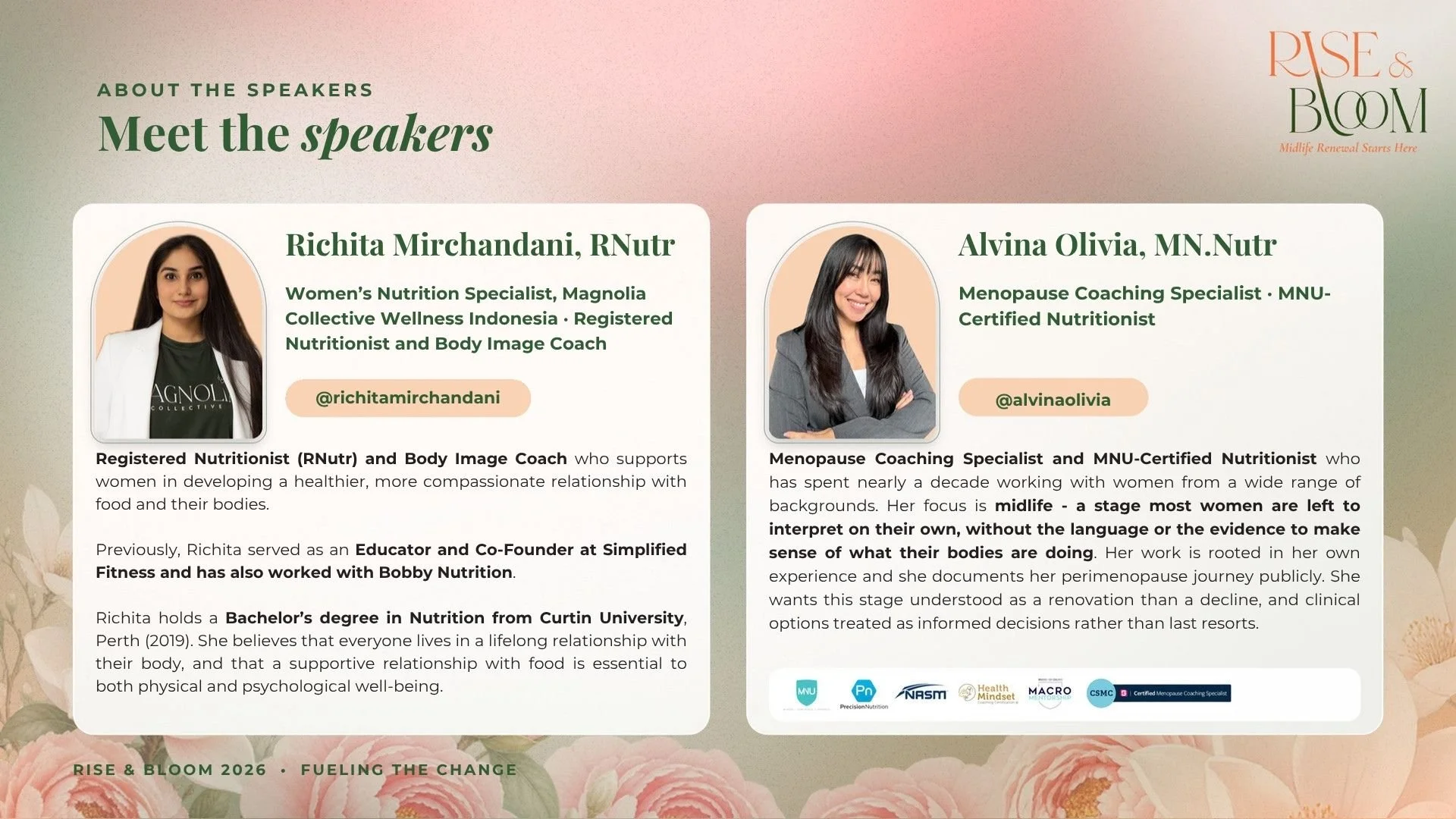
During this session, Richita Mirchandani and Alvina Olivia explored how women's nutritional needs evolve during perimenopause and menopause. The conversation covered the importance of protein, muscle health, essential nutrients, and balanced eating, alongside practical ways to build sustainable food habits. Participants were encouraged to approach nutrition with greater understanding and self-compassion, rather than restrictive dieting or the pressure to eat perfectly.
Key Takeways
01. Protein and Muscle Health Become More Important in Midlife
Muscle plays an important role in regulating blood sugar, supporting metabolism, protecting bones, and maintaining overall strength as women age.
The session highlighted a protein intake of 1.6 to 2.2 grams per kilogram of body weight per day for women in perimenopause, depending on individual needs and activity levels.
For example, a woman weighing 60 kg would aim for approximately 96 to 132 grams of protein daily. Spreading protein intake across breakfast, lunch, and dinner can help support muscle maintenance, particularly when combined with resistance training.
02. Focus on Nutrient-Dense Foods, Not Just Calories
Midlife nutrition involves more than managing calorie intake. The body needs adequate nutrients to support energy, digestion, bone health, and overall wellbeing.
Important nutrients discussed included calcium, vitamin D, iron, magnesium, omega-3 fatty acids, and B vitamins.
Whole-food carbohydrates, fibre-rich vegetables, healthy fats, and varied protein sources all contribute to a balanced eating pattern. Added sugars and ultra-processed foods can be enjoyed less frequently without requiring complete restriction.
03. Build a Balanced Plate Using a Simple Formula
Healthy eating does not need to be complicated or expensive. The speakers introduced a practical plate guide that can be applied to everyday Indonesian meals:
½ plate: Vegetables and fruit
¼ plate: Protein sources such as fish, chicken, eggs, tofu, or tempeh
¼ plate: Carbohydrates such as rice, potatoes, or other whole grains
A small portion: Healthy fats from nuts, seeds, avocado, or oils
Hand portions can also help estimate serving sizes when measuring tools are unavailable.
The goal is to create balanced meals using familiar foods, while adjusting portions according to individual needs.
04. Good Nutrition Does Not Have to Be Perfect Every Day
Alvina introduced the Plate Ladder, a practical approach to building healthier eating habits through three levels:
Minimal: What you can manage on your most difficult or busiest days.
Realistic: A balanced, achievable approach you can follow most days.
Goal: The eating habits you are gradually working towards.
For example, a rushed breakfast might begin with something simple, progress to adding eggs or another protein source, and eventually become a more balanced meal prepared in advance.
Every level represents progress. Even the smallest effort still counts.
05. Planning Ahead Makes Healthy Eating Easier
Making food decisions before becoming hungry can reduce the pressure of choosing meals during busy days.
The session encouraged participants to identify three reliable meal options from familiar places, such as an office canteen, food delivery service, or minimarket.
Prioritising protein and vegetables when ordering meals, keeping convenient snacks available, and preparing a simple food bag for work or travel can make balanced eating more manageable.
Small preparations can support consistency without requiring extensive meal planning.
06. Restrictive Dieting Can Work Against Your Midlife Health
Eating less is not always the answer to changes in weight or body composition during midlife.
Overly restrictive diets may contribute to inadequate nutrient intake, declining muscle mass, lower energy, digestive difficulties, and changes in mood or sleep.
Richita encouraged women to reconsider the belief that a smaller body is always a healthier body.
Instead of asking, "What should I cut out?", consider asking, "What does my body need more of?"
Adequate nourishment, strength training, and a healthier relationship with food can support both physical and emotional wellbeing.
07. Understand Your Nutrient Levels Before Taking Supplements
Vitamin D and iron were highlighted as nutrients that deserve attention during midlife, including among women living in tropical countries such as Indonesia.
Low nutrient levels may contribute to health concerns, but symptoms alone cannot confirm a deficiency.
The session encouraged participants to review their eating patterns, pay attention to symptoms, and discuss appropriate blood tests with a healthcare professional.
Food first, supplements when needed. Supplementation should be guided by individual requirements and medical advice rather than assumptions.
08. Let Go of Food Guilt and All-or-Nothing Thinking
Cravings, social eating, and occasional changes to your routine are normal parts of life.
Feeling guilty after eating something outside your usual plan can create an unhealthy relationship with food and make long-term habits harder to maintain.
The speakers encouraged a more compassionate approach that allows flexibility without abandoning nutritional goals.
One less-balanced meal does not erase your progress, and missing a day does not mean you have failed.
09. Consistency Matters More Than Perfection
The most effective nutrition habits are those that can be maintained through everyday life.
Rather than attempting a complete dietary transformation overnight, choose one realistic improvement you can begin with.
This might mean adding protein to breakfast, including more vegetables at lunch, drinking enough water, or preparing convenient food options for busy days.
The session reinforced three reminders:
You already know enough. Make it easy, not perfect. A missed day isn't failure.
What You Can Do Next
Start by looking at your current eating habits with curiosity rather than criticism.
Consider whether you are eating enough protein, including a variety of nutrient-dense foods, and giving your body the nourishment it needs to maintain strength and energy.
Choose one practical change that fits your lifestyle. It could be as simple as adding an egg to breakfast, including a serving of vegetables at dinner, or identifying a balanced meal you can order on busy days.
You do not need to follow a perfect diet to care for your health. Small, consistent improvements can make a meaningful difference over time.
Nourish your body with kindness. Make it easy, stay consistent, and remember that progress does not require perfection.
These takeaways are based on Richita Mirchandani and Alvina Olivia's presentation at Rise & Bloom 2026 and are intended for educational purposes. Individual nutritional requirements may vary, and personalised guidance should be sought from a qualified healthcare professional.
